Introduction
Choosing the right seed variety is one of the most important decisions farmers make before starting a growing season. Among the most common choices are open-pollinated seeds and hybrid seeds, each offering different characteristics, advantages, and considerations.
Understanding the difference can help farmers, growers, distributors, and agricultural businesses select varieties that better match their climate, production system, market requirements, and long-term farming goals.
What Are Open-Pollinated Seeds?
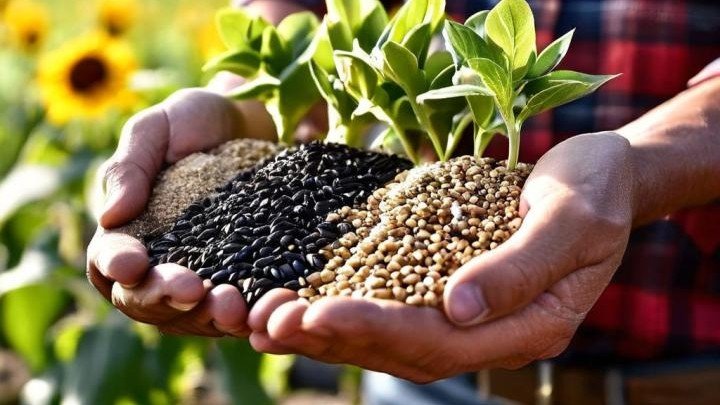
Open-pollinated seeds come from varieties that reproduce through natural pollination by mechanisms such as wind, insects, or self-pollination. When cross-pollination with other varieties is controlled, seeds saved from open-pollinated plants can generally produce plants with characteristics similar to their parent plants.
This makes open-pollinated varieties particularly interesting for farmers who want the possibility of saving and reusing seed from one growing season to another.
Advantages of Open-Pollinated Seeds
- Potential for seed saving and replanting
- Stable characteristics when properly maintained
- Greater genetic diversity within varieties
- Suitable for farmers interested in maintaining their own seed supply
- Can be well adapted to specific local growing conditions
What Are Hybrid Seeds?
Hybrid seeds are produced by deliberately crossing selected parent plants under controlled breeding conditions. The goal is to combine desirable characteristics from different parent lines.
Commercial F1 hybrids can offer advantages such as greater uniformity, vigor, productivity, earlier maturity, or resistance to particular diseases, depending on the crop and variety.
However, seeds saved from F1 hybrid plants generally do not reproduce the same combination of characteristics consistently in the next generation.
Advantages of Hybrid Seeds
- Greater uniformity
- Potential for higher productivity
- Specific disease or stress resistance
- More predictable crop development
- Suitable for many commercial farming systems
Open-Pollinated vs. Hybrid Seeds: Key Differences
The main difference is how the varieties are developed and how reliably their characteristics are maintained in the next generation.
Seed Saving
Open-pollinated varieties can often be saved and replanted when appropriate isolation and seed-selection practices are followed. F1 hybrid seeds are generally purchased again when farmers want to reproduce the same hybrid characteristics.
Uniformity
Hybrid varieties are often developed to provide greater uniformity in plant growth, maturity, and product characteristics. Open-pollinated varieties can show more natural variation between individual plants.
Production Goals
For commercial farming, hybrids may be attractive when uniformity, productivity, or specific resistance traits are important. Open-pollinated varieties may be preferred when seed saving, genetic diversity, or local adaptation are higher priorities.
Which Seed Type Is Better for Farmers?
There is no single answer that works for every farm.
Farmers should consider:
- Local climate and growing conditions
- Soil characteristics
- Crop type
- Target yield
- Disease and pest pressure
- Market requirements
- Production costs
- Whether seed saving is important
- Availability of suitable varieties
The best choice is the variety that matches the farm’s production objectives rather than simply choosing hybrid or open-pollinated seeds based on the label.
Why Seed Selection Matters in International Agriculture
For agricultural distributors, wholesalers, importers, and commercial growers, choosing suitable seed varieties is also an important part of building a reliable agricultural supply chain.
Different markets require varieties adapted to different climates, growing cycles, consumer preferences, and production systems. Access to dependable seed suppliers can therefore help agricultural businesses offer suitable products to farmers in their target markets.
Introducing Zeugma Seeds
Zeugma Seeds operates in the international agricultural seed trade, supporting B2B customers looking for reliable seed sourcing and export solutions.
The company supplies agricultural seeds to international markets and works with businesses such as distributors, wholesalers, agricultural companies, and other professional buyers.
What Zeugma Seeds Offers
- Agricultural seed varieties
- Wholesale seed supply
- International import and export
- B2B sourcing solutions
- Worldwide shipping and export support
- Support for distributors and agricultural businesses
Why Work With Zeugma Seeds?
For international buyers, a dependable seed supplier can make sourcing more efficient and help establish long-term business relationships.
Zeugma Seeds focuses on international B2B trade and provides agricultural seed sourcing solutions for customers looking to expand their product range and serve different farming markets.
Conclusion
Understanding the difference between open-pollinated and hybrid seeds allows farmers and agricultural professionals to make more informed decisions.
Open-pollinated varieties can provide advantages for seed saving and maintaining stable characteristics, while hybrid varieties can offer valuable traits such as uniformity, vigor, and targeted performance. The right choice ultimately depends on the crop, growing environment, production objectives, and market requirements.
For businesses looking for agricultural seeds for international markets, Zeugma Seeds can provide professional B2B sourcing and export solutions.
Contact Zeugma Seeds
🌐 https://zeugmaseeds.com/
📧 info@zeugmaseeds.com
📱 +90 537 644 52 27
Contact Zeugma Seeds to discuss your agricultural seed requirements, wholesale opportunities, and international sourcing needs.